

Disclaimer: The following content is provided for informational purposes only and is not intended as legal advice. Please consult your legal counsel for advice regarding your specific situation and compliance with applicable TCPA laws and regulations .
Overview
As significant changes to the Telephone Consumer Protection Act (TCPA) are set to take effect on January 27, 2025, we decided to conduct a survey to understand how ready insurance agents are in regards to compliance, operational changes and the use of Automated Telephone Dialing Systems (ATDS). These findings are crucial in assessing the overall readiness of agents as the regulatory landscape for many B2C online businesses will drastically change for the foreseeable future.
While our findings may or may not reflect the preparedness of the insurance industry as a whole, the survey highlights the need for all affected parties to stay informed and be proactive to ensure compliance and success.
Current Use of Automated Telephone Dialing Systems (ATDS)
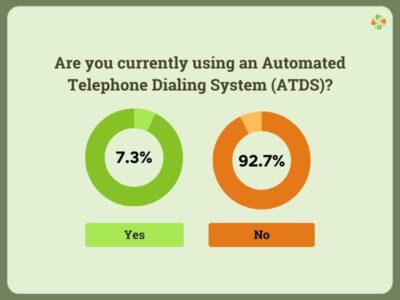
Question: Are you currently using an Automated Telephone Dialing System (ATDS)?
Key Findings: An overwhelming majority of survey respondents (92.7%) said that they are not currently using an ATDS.
This overwhelming majority response aligns with the upcoming compliance standards that are set to take effect in January 2025. While the use of an ATDS streamlines the communications process when dealing with a high volume of consumers, non-users benefit from simplified consent requirements and less regulatory hurdles in order to remain compliant at all times.
However, for the minority of respondents who are using ATDS, the upcoming changes necessitate a need to implement alterations to their communications processes. This includes, but is not limited to, redesigning lead forms, pre-recorded messages, and texts, to ensure explicit one-to-one consent, clearly stating the name of the seller and the nature of the communications.
Awareness of TCPA Changes
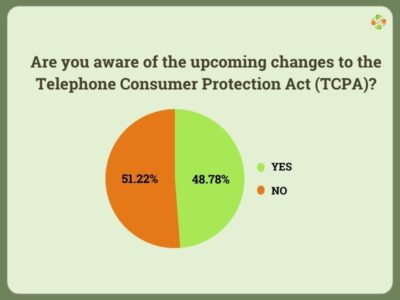
Question: Are you aware of the upcoming changes to the Telephone Consumer Protection Act (TCPA)?
Key Findings: Surprisingly, just over half of the respondents (51.22%) stated that they were unaware of the upcoming changes.
The lack of awareness by over half of the respondents raises concerns as it indicates a sense of unpreparedness among insurance agents. While the past regulations have allowed somewhat of a “free-for-all” when it comes to obtaining consent for multiple sellers from a single form, the upcoming changes will make these past practices illegal.
Agents who continue to remain unaware and do not implement the necessary changes to their lead generation process by January 27, 2025 (whether by choice or by accident), will be subject to potential fines (up to $1,500 per non-compliant call or message) and other legal consequences.
These alarming statistics highlight the urgent need for education among insurance agents and other affected digital marketing professionals. By gaining a firm understanding of the changes, only then will agents be able to properly adjust their practices to avoid non-compliance.
The Need for 1:1 Consent Insurance Leads
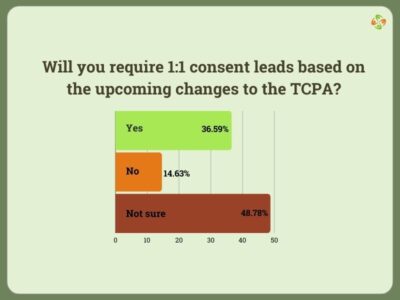
Question: Will you require 1:1 consent leads based on the upcoming changes to the TCPA?
Key Findings: Almost half (48.78%) of respondents are uncertain if 1:1 consent leads will be required under the updated TCPA regulations. Additionally, despite 92.7% of respondents stating that they do not use an ATDS, many still expect to need 1:1 consent moving forward.
The split in responses indicates a widespread misunderstanding of what the new regulations, specifically in regards to auto dialer usage, actually means. While there is still some ongoing debate regarding when 1:1 consent leads are explicitly required, ensuring that all current generation practices align with the 1:1 model indicates a proactive approach to remain in compliance, mitigate risk, and build trust with consumers.
On the other hand, the alarming number of individuals responding with uncertainty indicates unpreparedness, and may result in agents scrambling to make last-minute changes, or face costly penalties.
In the upcoming months, agents should expect for rule enforcement to tighten, and more clarity surrounding the ruling to be provided. Therefore, adopting 1:1 practices now will position agents for long-term success.
Key Survey Takeaways
Low ATDS Usage
The vast majority of survey respondents (92.7%) are not currently using Automated Telephone Dialing Systems (ATDS). For these agents, the compliance process will be much simpler, as much of the new ruling revolves around 1:1 consent, particularly in regards to ATDS.
With that being said, the trend also means that many agents are not leveraging the streamlined functionalities that ATDS provide when used in a compliant manner. As the ruling plays out and technology continues to evolve, agents should continue to evaluate their current processes to understand if an ATDS is beneficial to their operations or not.
Awareness Gap
Slightly over half of survey respondents (51.22%) were unaware about the upcoming TCPA changes. This stunning statistic highlights the need for widespread education across the insurance sector. With the new TCPA ruling set to take effect in less than 2 months, this lack of awareness could result in costly penalties, if the current practices of agents are not up to date.
Confusion About 1:1 Consent
A large portion of surveyed respondents (48.78%) noted that they are unsure about the necessity of 1:1 consent under the new TCPA ruling. This finding indicates that a high number of individuals misunderstand or have adopted alternative interpretations of the upcoming requirements.
While it is still “up in the air” as to whether the 1:1 consent requirement applies to all communication methods or just when using auto dialers, ensuring that all current practices reflect 1:1 consent, minimizes legal risks, and increases consumer confidence.
Resources to Stay Ahead
In order to prepare for the upcoming TCPA changes, it’s important to be proactive and take steps to ensure compliance. This includes:
- Accessing Education Material: As a leader in the insurance lead generation space, Benepath.net is home to a number of resources aimed to help agents prepare for the upcoming industry changes. (See our list of TCPA-related articles below).
- Crafting Compliant Consent Forms: Ahead of the ruling taking effect, it’s crucial that your consent and lead form processes meet the new standards. Under the new ruling consent forms must clearly and conspicuously provide the name of the individual seller at hand, as well as the nature of the communications. So for example, if you are an agent selling health insurance, somewhere during the form process you must state your name as the sole agent who will be contacting the consenting consumer. Additionally, you must put in writing that you are contacting them “to provide a health insurance quote as requested,” or some similar verbiage.
- Obtaining 1:1 Consent Leads Effectively: In addition to making the proper changes to your lead forms and consent processes, it’s important that you take additional measures to ensure 1:1 consent. This could include partnering with trusted lead generation teams like Benepath, who have a history of industry compliance, and ethical consumer practices.
Closing Thoughts
For insurance agents, and digital marketers alike, the results of this survey serves as a true wake-up call. If your current practices are not up to date, it’s important that you act now to avoid the risk of hefty fines, or other legal actions. As the year comes to a close, in order to remain competitive and compliant going forward, you must educate yourself, and make strategic changes, to be in the best position to succeed.
While some of the specifics of the ruling are unclear, one thing is for sure— the 2025 TCPA changes are coming. Take the steps now to protect your business so you can thrive no matter what happens.
For more information regarding the ruling visit our resource library. To learn more about the strategic advantages of partnering with Benepath’s lead generation services, simply fill out a form or call us directly at (888)-684-3121.


